Saturday, March 13, 2010

Newton Vernal Pools

Vernal Pools are ponds generally lacking fish that provide important breeding habitat for many amphibian species. Vernal pools also support a very diverse array of insects and other invertebrates. In Massachusetts, citizens can submit vernal pool data to the Natural Heritage & Endangered Species Program at MassWildlife, in order to certify a pool. Certified vernal pools receive some additional regulatory protection.

In Newton, we have 9 Certified Vernal Pools, and 4 additional known pools that qualify for certification. Two certified pools in Cold Spring Park; two in Webster/Hammond Woods; one in Kennard; one south of route 9 and east of Dudley Road; three on DCR land along the Charles, south of Wells Avenue.

Beginning at the end of March, spotted salamanders have been laying eggs in some of our vernal pools. Here is a photograph of an ovipositing spotted salamander from a pool west of Newton.

Monday, June 8, 2009

Pitcher Plant


Here's A Pitcher Plant in full flower located within easy walking distance of Newton. This magnificent plant can digest insects and other invertebrates in its "pitcher."
Wednesday, June 3, 2009

Bird Nesting Season

Mid-May through June is a great time to observe nesting birds. Here is a photograph of a female Robin collecting mud in my garden to construct its nest. The weather had been dry, so the bird was "crazy" for mud. It flew within 3-5 feet of me, stayed for some time collecting mud, and returned repeatedly.

Here are two additional photographs of nests I observed recently outside of Newton, but in eastern Massachusetts. The first photograph is of an Eastern Towhee nest. This species nests directly on the ground.
The next photograph is of a Veery nest in a low shrub. The blue eggs belong to the Veery, while the speckled egg belongs to the parasitic Brown-headed Cowbird. This species is a threat to many native neotropical migrants in our area. I don't know if either of these species currently nest in Newton. It would be great to do a breeding bird atlas for our City...

Thursday, May 14, 2009

Roadkill

Followers of this blog may recall that I have special fondness for roadkill. Here is a female Northern Oriole in good condition found dead on a Newton Road last May. I also found an American Goldfinch that month. Birds may be more likely to get hit during early Spring as they return from migration and settle unfamiliar territories? Spring and Fall are also good times to check for window collisions. My best find in Newton is pictured here. Now is an excellent time to be looking for live birds as well as spring migration has peaked. Nahanton Park and Mount Auburn Cemetery are excellent spots to visit within the next few days.

Monday, May 4, 2009

Eastern Newt


Here's a photograph of an Eastern Newt from south Newton. As far as I can tell this salamander species which is common in Massachusetts is rare in Newton. If you have seen this species here, please let me know.

Most salamander species in our area have aquatic larvae and terrestrial adults, aside from some stream-dwelling species. In contrast, adult Eastern Newts are typically aquatic, and inhabit permanent ponds with fish. Interestingly, juveniles spend several years as terrestrial "efts" before returning to ponds as adults. Eastern Newts have been shown to be sensitive to forest loss, which helps to explain their relative rarity in Newton. Eastern Newts sometimes inhabit semi-permanent ponds (vernal pools), and at these sites adults seem to emerge from the ponds in the fall and overwinter in the forest, only to return to the pond in the spring.

Here's a link to a picture of two other local salamander species. How many amphibian species occur in Newton? Help me find out by reporting your sightings to me.

Tuesday, April 28, 2009

Bluegills for Breakfast


Just renewed my fishing license and caught these Bluegills at Crystal Lake today. Should make for an excellent breakfast.

Tuesday, April 21, 2009

Turtles of Newton


Here are photos of an adult and juvenile Spotted Turtle taken recently in southeastern Massachusetts. Several years ago I discovered this species within the Brook Farm Historic Site just south of the Newton border. This species almost certainly occurs in Newton in the Wells Avenue Charles River Path area. Although it was likely more widespread in the past, it is unlikely that the Spotted Turtle still occurs elsewhere in Newton.

Until fairly recently, the Spotted Turtle was listed as a species of Special Concern, protected by the Massachusetts Endangered Species Act. Although the species was determined to be somewhat more widespread than previously thought, Spotted Turtles are vulnerable to road traffic and other threats, and are likely declining in Massachusetts.

It is interesting to explore which species manage to persist in urban and high density suburban landscapes such as Newton. The other native turtle species occurring in Newton are the Painted Turtle, Snapping Turtle, and Musk Turtle. It is likely that Eastern Box Turtles and Wood Turtles historically occurred in Newton, but have been extirpated. In April and May look out for basking turtles and in June look for nesting turtles. Here's a closeup photo of a hatchling Painted Turtle from Bullough's Pond.
Monday, April 13, 2009

Vernal Pool Certification


In Massachusetts, citizens can submit data to the Natural Heritage & Endangered Species Program in order to certify vernal pools. Certification provides enhanced regulatory protection under state law and under local bylaws in some cases.

Involving children in the certification process can be a marvelous experience for all.

Sunday, April 12, 2009

Turtles


Here are a Snapping Turtle and a Painted Turtle from a Vernal Pool in Nahanton Park today. The Snapper was about 15 inches long.

Unfortunately, turtles in Massachusetts are increasingly vulnerable to road traffic.


For information about turtle conservation in Massachusetts, click here.

Saturday, April 4, 2009

Peepers Mating


Here are some photos of Spring Peepers in amplexus in Hammond Woods earlier today. They are actively calling at locations such as Hammond Woods and Nahanton Park right now.

Most of Newton's vernal pools have been certified, but I am working on certifying the remaining pools. If you are interested in helping out, please contact me.

Monday, March 30, 2009

On the move

Here's a picture of a large gravid Spotted Salamander as well as the rare Blue-spotted Salamander taken in Newton earlier this week. These vernal pool breeding species have been on the move with the recent rain. The Blue-spotted Salamander is listed as a species of Special Concern in Massachusetts and is protected pursuant to the Massachusetts Endangered Species Act. This species has a fascinating and bizarre means of reproduction which will I will describe in a future posting. I am collaborating with other researchers across the state in collecting tissue samples from this species this spring for a genetics study.

Saturday, March 7, 2009

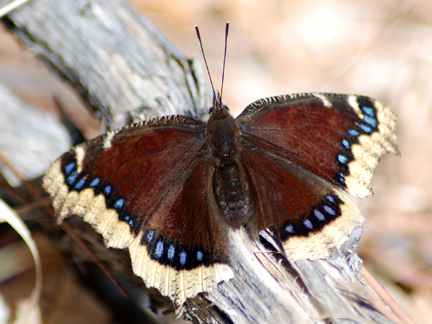
Mourning Cloak

First butterfly of the season over Washington Street. The Mourning Cloak overwinters as an adult, and can sometimes be seen flying in late winter.

Sunday, March 1, 2009

Like Clockwork

February 26, 2009 - Red-winged Blackbird singing at Bullough's Pond.

Monday, June 9, 2008

Musk Turtle

Which native species continue to occur in Newton and other urban environments? How are they distributed and will they persist? Which species are thriving (e.g. American Robin), and which species are barely hanging on (Wood Thrush). I continue to explore Newton in an attempt to begin to answer these questions. For example, last year I documented a Flying Squirrel, and discussed the distribution of Wood Frogs and Red Squirrels. Yesterday, while fishing at Crystal Lake, I observed a Musk Turtle. While I knew that Crystal Lake supports Painted Turtles and Snappers, I was unaware of the presence of these more secretive turtles. Presumably the Musk Turtles of Crystal Lake are completely isolated from other Musk Turtle populations due to surrounding development and the risk of road mortality?

Wednesday, May 21, 2008

Tent Caterpillars

Here's a photo of tent caterpillars on a black cherry tree along the Charles River Path near Bridge Street. Other highlights of our walk included silver maple (a floodplain species associated with large rivers), and yellow warblers in abundance.

Friday, May 9, 2008

Don't Miss Vernal Pool Day!


Hope to see you tomorrow (Saturday) at Newton's Vernal Pool Day. See turtles, tadpoles, and more... For additional information click here.

For information on a Mother's Day bird walk, click here.

Saturday, April 26, 2008

Mosquito Season

Those of us who have been out in the woods lately have been enjoying essentially mosquito-free conditions. This is about to change! These are some photos I took of mosquito larvae & pupae in a puddle in some woods in the area (4/26/08). The small woodland pools are absolutely teeming with mosquitoes. In the closeup shot below, you can see the larvae (longer, with a distinct head) and the pupae (black cylinders). The larvae are sometimes known as "wrigglers" because the swim by twisting sideways and spinning. The pupae swim by somersaulting. Mosquitoes are flies (Class Insecta, Order Diptera, Family Culicidae). I believe that these are spring mosquitoes in the genus Aedes or Ochlerotatus)? Mosquitoes are fascinating creatures on many fronts... For information about mosquitoes in Massachusetts, including a citizens quiz, click here.

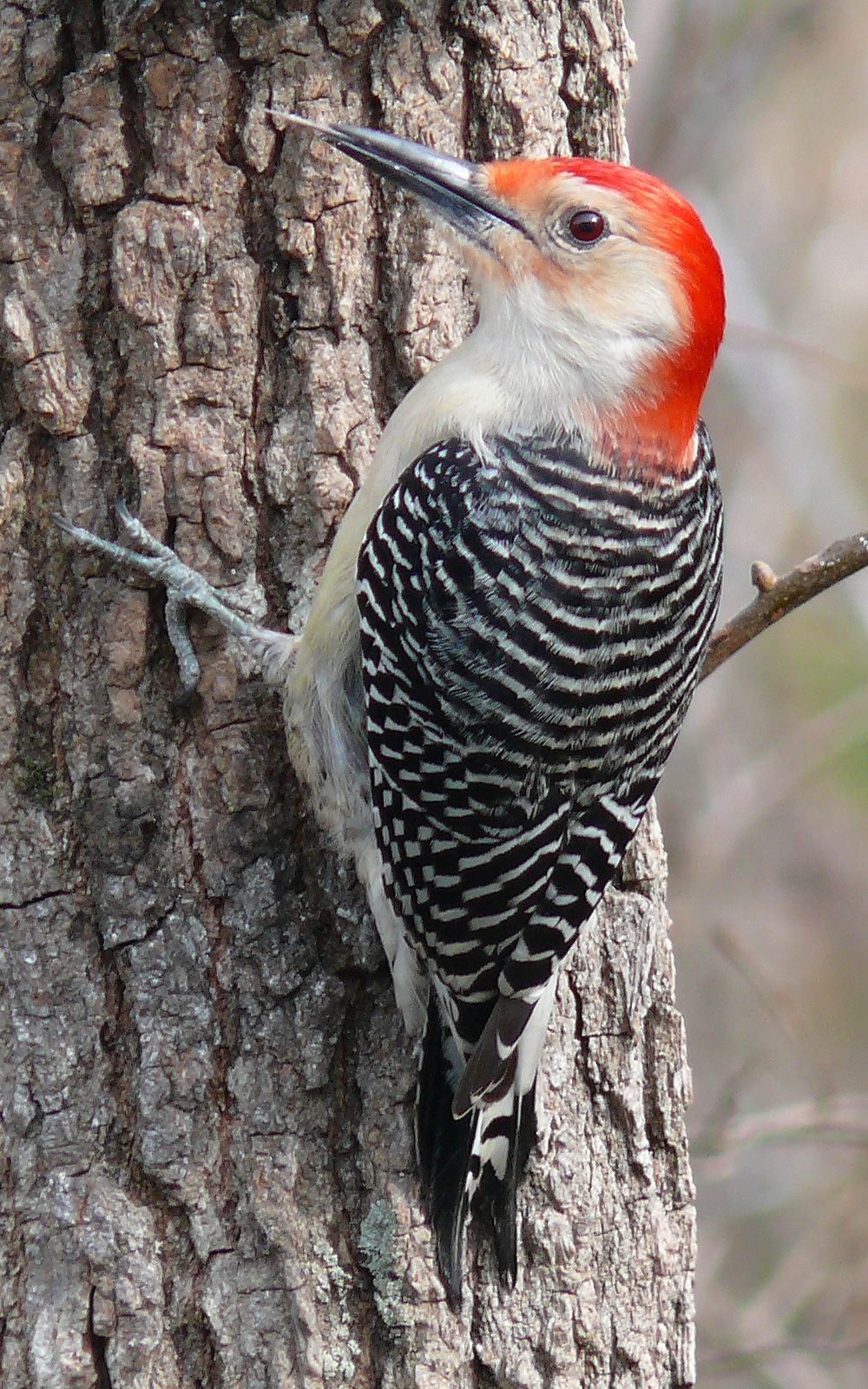
Red-bellied Woodpeckers Mating

Source: Ken Thomas

Red-bellied Woodpeckers observed mating, south Newton, 4/26/08. This species has expanded its range north in recent decades. Global warming?

Spicebush

Flowering Spicebush (Lindera benzoin) is a sure sign of spring. As of last Saturday (April 19) it was blooming at Hammond Woods in Newton. For a closeup photo of flowers, click here. The plant has brilliant yellow foliage and bright red berries in fall. The leaves are fragrant, when crushed (hence the name). This is a wetland plant, but, as a garden plant, it adapts well to drier soils. It's a great native shrub to include in your garden!

Saturday, April 19, 2008